
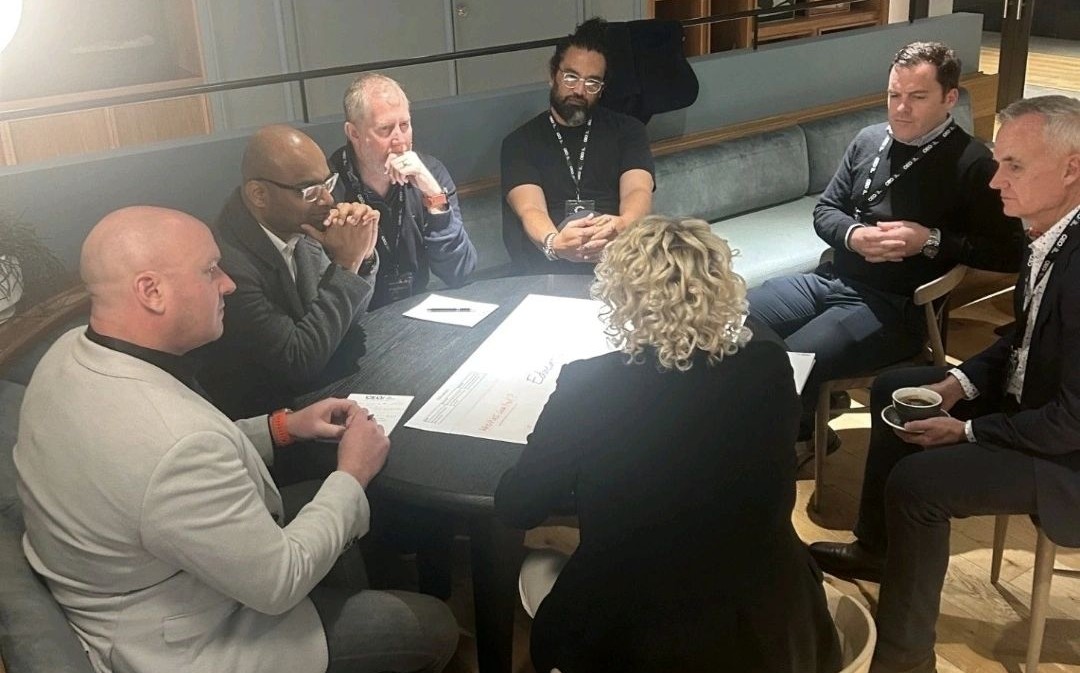
One of the most important shifts I’ve made in leadership is this:
I no longer aim to be the one with all the answers.
I aim to be the one still learning.
For a long time, I believed leadership meant certainty. Being decisive. Holding the line. And while decisiveness matters, I’ve learned that certainty without curiosity quickly becomes a liability, especially in growing businesses.
Systems help create clarity. They reduce noise and protect people under pressure. But systems are not static. They age. They stretch. They break. And when they do, the real question isn’t whether something went wrong, it’s whether leaders are willing to listen when it does.
Trust me, there have been moments where I’ve stepped back and thought,
*“F#k me… what did I do there?”
Moments where a decision made with good intent landed poorly. Where a system I believed would help actually created friction. Where feedback surfaced something I didn’t see at the time, but couldn’t ignore once it was said out loud.
Steven Bartlett captures this reality well in The Diary of a CEO when he says,
“The most dangerous thing a leader can believe is that they’ve finished learning.”
That line stuck with me. Because leadership doesn’t reward certainty, it rewards awareness.
Around the same time, I was in a workshop led by Jesse Itzler, where he spoke about building his life by design. Not drifting into outcomes, not reacting to circumstances, but intentionally designing how he lives, works, and shows up.
That idea stayed with me.
Because leadership is no different.
If you don’t design the environment people operate in, one will form anyway. And more often than not, it’s shaped by urgency, habit, and whoever shouts the loudest. High-performing organisations don’t happen by accident. They are created by design.
The environment people work in, the systems they rely on, the behaviours that are rewarded or tolerated, the way pressure is handled, all of it is designed. Either consciously, or by default.
Many organisations say they value feedback. Far fewer create environments where it’s genuinely safe to give. Feedback is often welcomed in theory, but resisted in practice, especially when it challenges long-held assumptions or exposes blind spots at the top.
I’ve had to confront that myself.
Staying a student doesn’t mean lacking conviction. It means recognising that leadership isn’t a finished state. Markets change. People evolve. What worked yesterday can quietly limit you tomorrow if you’re not paying attention.
Creating an environment by design means being willing to revisit what you’ve built. It means asking whether your systems still serve the people inside them, or whether people have quietly adapted themselves around broken structures.
At LM4 Group, this mindset shapes how we approach growth. We build systems with intention, but we revisit them with humility. We treat feedback as data, not criticism. We understand that refinement isn’t failure, it’s stewardship.
Learning, in this context, becomes a form of care.
It tells people that progress matters more than ego. That clarity is more important than control. That leaders are prepared to evolve alongside the teams they lead.
All in all, I remain a student of this work. Still learning. Still refining. And always open to feedback. Because the goal isn’t to be right, it’s to create environments, by design, where people and organisations continue to get better together.